
KQED was an important part of my life through the 1980’s and early 1990’s. I have serious ongoing concerns about the direction and decisions made by KQED’s self-perpetuating Board and Management, since Tony Tiano left the station in 1993.
(As stated on my homepage, read more about KQED’s first twenty years in this excellent Current article by David Stewart from February 3, 1997, “KQED Made its Mark by Making Programs.”)
I was honored to become a KQED employee in the 1980’s, leaving KQED in the late 1990’s to earn my MLIS and become a librarian for a county government system. (My colleagues knew me by my middle name and a different last name back then.)
I have worked in University, College and City library systems where serving students and the public from all socio-economic levels, allied closely with my values while employed in the KQED Television Programming Department, then later, during my employment in KQED-FM Audience Services under JoAnne Wallace. Providing reliable, fact-based information and entertainment serving the public interest, remained key factors in my choice of careers.
Employees Volunteer Their Skills
Like many KQED staff members, I donated my time after work and on weekends while volunteering on KQED productions. Working at KQED, for many of us, was a passion and avocation, it was far more than a daily job for a paycheck.
KQED Television Programming Department
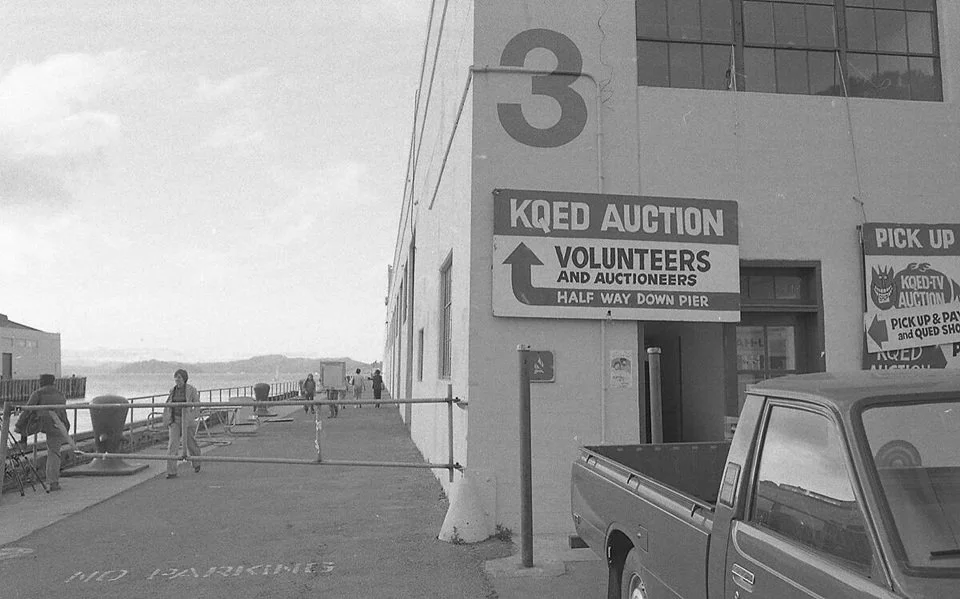
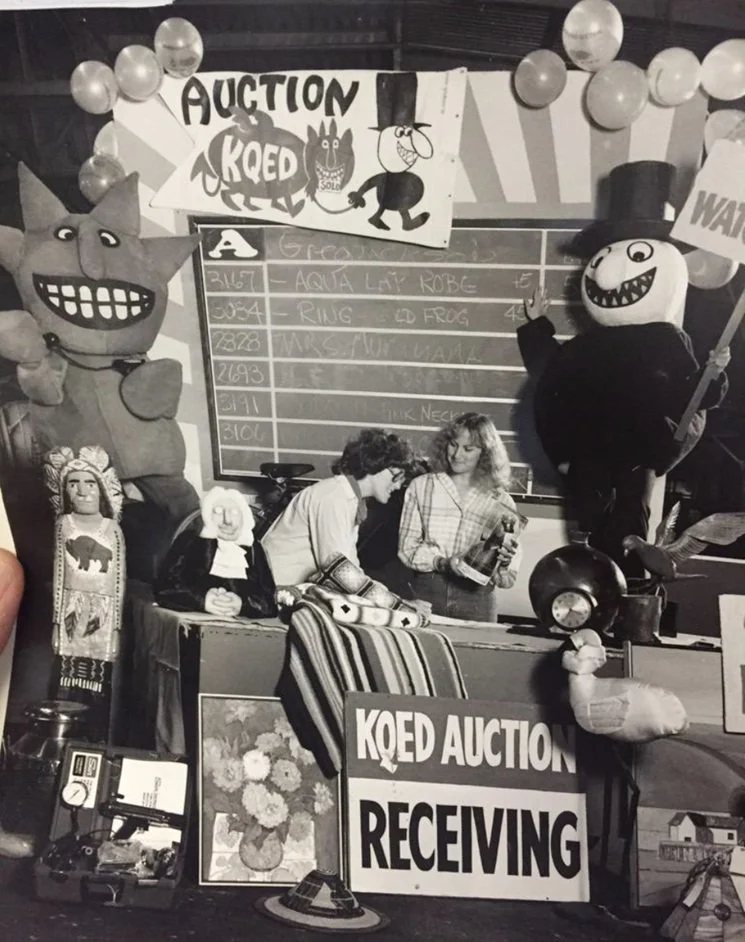
During my years in KQED TV Programming I worked on the annual, live KQED Auction at the Cow Palace, Opera in the Park at the Golden Gate Park Bandshell, and assisted with live Pledge Breaks. During my work week I tracked television programming purchases and air rights, as required by our KQED TV Programming budget, then expensed those programs in our budget as they aired. I pulled Nielsen ratings and wrote a column for our KQED staff monthly newsletter, AIR.
KQED Radio Administration Department
During my years at KQED FM, I wrote Public Service Announcements for nonprofit groups who sent Press Releases to our radio station, hoping for on-air mention of their events on our daily, KQED FM Community Calendar. I volunteered with FM production staff during Sedge Thompson’s West Coast Weekend, a live two-hour broadcast on Saturday mornings, first held inhouse, then from Ft. Mason Center and later, from The Top of the Mark, in the Mark Hopkins Hotel. (That program is now Sedge Thompson’s West Coast Live.)
Once A Dynamic And Visionary Production Environment
Working at KQED was very rewarding and I have many fond memories of staff and KQED productions from my time there. As staff, we worked together, socialized together and volunteered together after hours at the station, on location, plus doing volunteer service for outside organizations around the greater Bay Area region.
After The 1989 Loma Prieta Earthquake
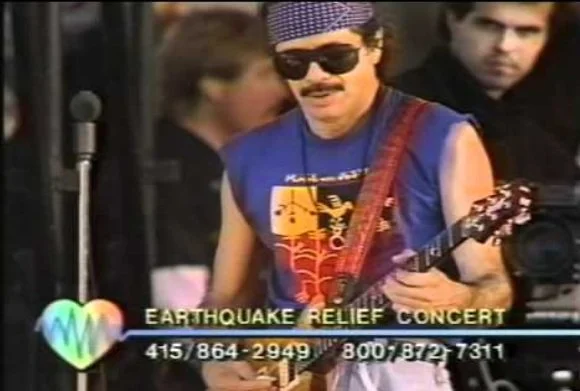
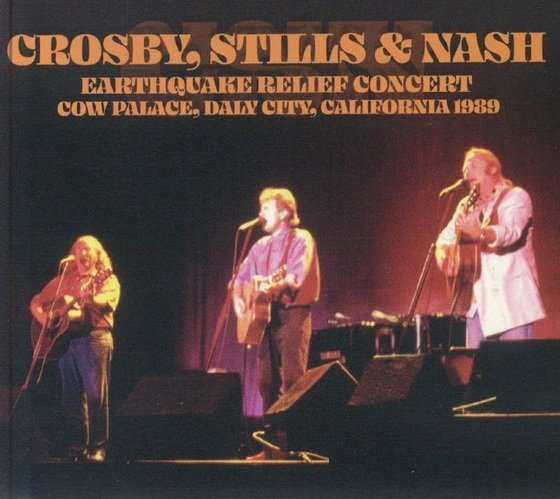
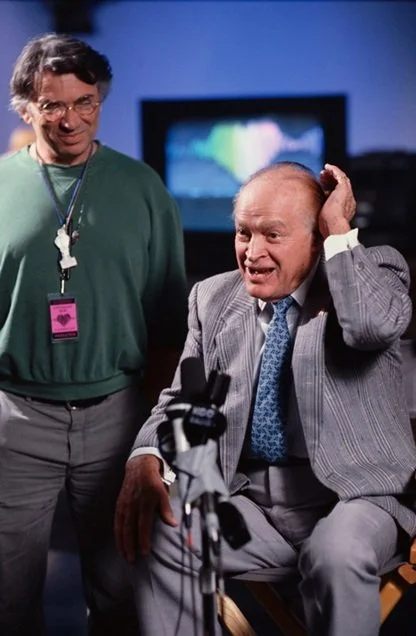
I wrote about my experiences while working at KQED during the 1989 Loma Prieta Earthquake, then volunteering inhouse for the subsequent 1989 Earthquake Relief Concert: It’s Everybody’s Fault, hosted by Bill Graham and KQED, at the old KQED 8th and Bryant studios. That Sunday “rock-a-thon” fundraiser featured Bob Hope and a kaleidoscope of musical talent from Rock, Jazz and Soul who donated their talents at three Bay Area concert venues to support Bay Area Earthquake victims and recovery efforts.
Bay Area Broadcast Production Collaborations
That local collaboration demonstrates what KQED can do today, to fully engage Bay Area viewers, celebrities, new members and potential new donors, using similar Bay Area entertainment and educational collaborations.
The three concerts were a powerful, televised Bill Graham collaboration with KQED, which allegedly raised over $2 million for earthquake impacted communities. (Click on the Santana and Crosby Stills and Nash images on this webpage to view videos from the Earthquake Relief Concert: It’s Everybody’s Fault.)
Aggregated Funds And Layoffs
I had been a KQED donor and Sustaining Member since 1982. I cancelled my Sustaining Pledge in October 2025 after reading on ProPublica Nonprofit Explorer, whose collection of tax filings for KQED online alleged that the former President and CEO received $984,444 from KQED in 2020, that the current KQED President and CEO received $493,570 in 2020, with alleged KQED 2020 Management salaries (if my math is correct), totaling $5,182,892. Also in 2020, the station, according to ProPublica Nonprofit Explorer, allegedly had a 2020 NET income of $11,429,521, yet received $103,418,209 in total revenue. Of more concern, 2020 was the same year KQED alleged a projected $7.1 million budgetary shortfall, to justify a 5.5% staff layoff due to COVID, while some FM news reporters were still producing their news pieces at home.
Diverging Views On Multiplatform Transition
In my opinion as a former KQED employee, with all due respect to the KQED Board and management, I completely disagree with the KQED Board and management decisions made in 2009, which were compounded by, in my opinion, more troubling Board and management decisions from 2009 through 2025. In 2009-2021 the station began a rapid expansion of staff, divisions, services, expenses and payroll obligations, some of which allegedly were not related to producing inhouse broadcast television programs.
Conservative Financial Planning
As those of us who have worked on nonprofit boards fully understand, the political climate is always shifting and uncertain, so wise nonprofit leadership scales it's staff, services and aspirations to very moderate levels which can be sustained solely through conservative use of actual and trending donor dollars. KQED and PBS stations had already been threatened with defunding for decades, so KQED, in my opinion, should have taken a more conservative economic approach by fundraising for local inhouse produced Bay Area on-air programming, rather than, in my opinion, unnecessary architectural remodeling, made allegedly to upgrade the look of the station and it's workspaces, and to convert it's largest TV production studio to a 232-seat performance space.
Use Of Campaign 21 Donor Funds
Campaign 21 allegedly raised over $140 million for a much-needed $46 million digital upgrade, plus $94 million for, in my opinion, the unwise and extravagant station remodel mentioned above, in part to accommodate (in my opinion) a now overexpanded staff employed in an array of new divisions and services, most of which were allegedly not related to inhouse television production.
According to KQED, Campaign 21 fundraising allegedly began in 2013 and concluded in 2021. Layoffs began in 2020, as stated in the KQED article linked above.
Broadcast Production On A Budget
In my opinion, KQED no longer seems as fiscally responsible and visionary as the once very frugal, conservatively staffed and highly efficient Bay Area television production-driven station, which I experienced during my employment years there in the 1980’s and 1990’s. (Jonathan Rice was very conscious of station expenditures, once warning my TV Programming colleagues not to waste rubber bands.)
Remodel Versus Broadcast Production And Staff Retention
It appears now, as an outsider and member, that KQED leadership’s desire for an alleged $94 million showplace building in 2021, may have superseded a more prudent fundraising goal, which could have entailed soliciting funds for local television and radio broadcast programming production, plus retention of inhouse radio and television production staff.
In my opinion, as someone who follows the stock market to gauge the impact of world politics on financial markets, KQED could have survived the recent loss of Federal funds nearly intact, had the KQED Board and management chose to reject a remodel expenditure, fundraise, then invest $94 million (or whatever dollar figure they could produce) in dividend-producing stock. Dividends would be intended for future local radio and television production and retention of inhouse production staff. In my opinion, that investment would have been the wiser course of action, since as Michael Islip allegedly stated in a June 13, 2025, Current article, KQED corporate sponsorship had been dwindling.
Financials And Tax Filings
In January 2026 I made a $6.50 donation representing the alleged 6.5 hour annual total for all broadcast 30 to 60-minute local television programming now produced inhouse by KQED staff. (As of January 2026, the only television program which KQED produces is Check Please! Bay Area.) I had second thoughts about cancelling my support, made a $100 donation, then set up a very small $10 monthly recurring Pledge in January 2026, telling the KQED Membership and Major Giving/Philanthropy departments that it was a good faith Pledge, made with the expectation that KQED would produce more inhouse, local interest television programs for Bay Area broadcast, using inhouse KQED production staff, in the future.
To put all of this financial data in perspective, you can compare 2020-2024 KQED management compensation and revenue over the last several years, plus similar data for KJPK and KRCB (Northern California Public Media), PBS Headquarters in Arlington, Virginia, WGBH in Boston, WNET in New York, and at other large market PBS stations, using a Nonprofits search on ProPublica Nonprofit Explorer.
Member Directed Contributions
I told the kind folks in KQED Membership and KQED Major Giving/Philanthropy that I would increase my Sustaining Pledge when KQED committed to a new, Campaign 21-style fundraising effort to restore inhouse television and radio production staff, plus significant 30 to 60-minute local broadcast television and radio programming production inhouse, without using outside contractors. As I stated elsewhere on this site, I have always contacted KQED Membership directly to indicate how I want my Pledge dollars to be used, in my case, only for inhouse produced broadcast television production by KQED staff.
Insideradio.com published a June 17, 2019 article entitled, “How KQED Transformed into a Multi-Platform Media Powerhouse.” The article quoted John Boland, who allegedly stated:
“The digital disruption of regional media had become a major crisis, and audiences were gravitating to digital devices and away from radio and TV”.
After mulling over Mr. Boland’s comments, as a former staff member and longtime KQED member, I feel that the use of $94 million in Campaign 21 funds for an unnecessary station remodel was a financially unwise move by KQED leadership, allegedly resulting in the loss of television and radio production staff, plus the elimination of the local inhouse KQED television production division.
Sharing Donor and Member Data with Third Parties
Unfortunately, I later cancelled my KQED pledge and asked KQED to delete all of my data from their Member, Donor and PBS Passport lists, and all other stored KQED data, after reading articles from SFGate and the L.A. Times about KQED’s alleged practice of sharing and “renting” member data through alleged “list brokers”, who allegedly shared and “rented" KQED Member and Donor Lists with a political party in 1999, as reported by the LA Times and SFGate articles mentioned above.
Despite the title of this webpage, I do not "honor” the choice of the KQED Board and leadership to share and rent donor and member lists. (I doubt that the KQED Board and KQED management provides their own personal data to KQED’s hired data list brokers and to third party mailing services, for rental and sharing purposes.)
KQED has since allegedly stopped providing member lists to political parties, according to their Member Information Policy webpage dated February 13, 2020 and accessed online, June 10, 2026 at 6 p.m. On that day and time, the KQED Member Information Policy webpage stated:
“KQED will specifically limit the grant of rights to receivers of the list to a one-time use for purposes of one mailing, with the affirmative requirement that the receivers then destroy or return the list. Our list rental/exchange program is administered by a list broker or third party mailing house, which has a contractual obligation to obtain KQED’s approval for any rental/exchange, and to require each recipient to enter into a confidentiality agreement as well as to agree to the one-time use/return or destroy obligation.”
Unfortunately printing the KQED Member Information Policy and KQED Privacy Policy from their website, leads to a floating grey bar covering several sections of important policy text on both webpages.
If you navigate to one of those pages at a time, press and drag your cursor from top to bottom to highlight the entire webpage, then select “copy" in the floating menu which will appear, you can then open Word and “paste” the entire webpage into a new, blank Word document. The entire webpage will appear in that new document, without the obstruction of the grey bar. You can then save the file as a PDF.
I was able to save Word PDF copies of the June 12, 2026 accessed online complete webpages, with graphics, of the April 1, 2025 KQED Privacy Policy and the February 13, 2020 KQED Member Information Policy, in that manner, for my own educational and reference purposes.
Destination of “Rented” and “Shared” Member Data
To my knowledge, KQED and KQED’s alleged hired list brokers do not contact members first, to ask, “Hey, can we ‘rent’ or ‘share’ your data with these specific outside groups?”
On June 10, 2026 at 6 p.m., KQED’s online February 13, 2025 version of the Member Information Policy webpage, under: Use of Member Information by Other Organizations, stated:
“KQED does not sell its list of members to other organizations. However, in order to assist in its membership and fundraising efforts, KQED periodically rents and/or exchanges the names and addresses of its members and former members (the “Membership List”) with other organizations, using a process which does not permit the other organization to review or retain a copy of any member information.
Rental and/or exchange of the Membership List allows KQED to expand its membership base by obtaining the names and addresses of other likely donors, and provides a valuable source of additional funding.”
Shannon Vallor, an AI Ethicist/Visiting Researcher at Google, in a January 10, 2019, “On Data Ethics” interview with Jeff Kampfe, Hackworth Fellow at the Markkula Center for Ethics at Santa Clara University, had this to say about user data:
“A second important notion is the ability to understand [that] data is about people. Data points are not abstract subjects that can be treated as cells on a spreadsheet to manipulated. Data represents observations and indications of human life and activity. It reveals things about individuals who have moral status, dignity and the right to be treated as such. I think good data scientists never forget that. They never forget the people behind the data and the moral respect they are owed.”
A KQED representative stated that allegedly members were informed during the online contribution sign up process that they could opt out of sharing their data, however, as a member since the 1980’s, I can't recall ever being sent or seeing that information attached to my KQED Pledge sign up process online, my Pledge receipts nor my Pledge acknowledgements. Like many longtime KQED members (I had been a member since approximately 1987), I had no idea that KQED shared or “rented" my data, even as a KQED employee years ago. I trusted KQED, as a nonprofit Public Broadcasting affiliate, to protect my privacy.
Pledge Privacy Options
A scan of KQED’s online Pledge sign up portal on June 10, 2026 at 6:10 p.m., allegedly does not show any data sharing or opt-out disclaimers before potential donors input their personal data. Likewise, that information allegedly did not appear in my regular Donor tax and contribution acknowledgement letters from KQED, since my first Pledge in 1987. (I checked my last KQED Sustaining Member “Thank You” letter from 2026, today. Likewise, an April 1, 2024 Thank You letter also omits mention of the Member Information Policy and alleged sharing or renting of my data, or the process to opt out of that practice for my privacy.)
The data sharing opt-out for Californians can be found on KQED’s lengthy Privacy Policy webpage. It was extremely disappointing to learn that KQED had adopted a Member List data sharing practice. Having worked at other nonprofits and government agencies, I feel that this practice violates and exploits member privacy and donors’ trust.
Even after submitting KQED opt-outs and data deletion requests, followed by several emails to privacy@kqed.org, plus an assurance that my data had been deleted by a KQED staff member via email, two days after KQED reported my “deletion", I received a KQED Newsletter email from Michael Islip “Welcoming” me to KQED. That began the deletion process once again.
California residents have the right to submit Privacy Complaints about organizations who will not delete their data to the California Privacy Protection Agency, who enforces the California Consumer Privacy Act. The CPPA will follow-up with the offending organization to ensure data is deleted as requested by the victim.
I now contribute solely and significantly to Northern California Media (KRCB and KPJK) who do not “rent", sell or share Donor or Member data, and who produce excellent, multiple series on Bay Area life, with far fewer staff, using annual revenue streams which are only a fraction of KQED’s annual budget, as reported on ProPublica’s Nonprofit Explorer.
Radio And Television Production Staff
The loss of KQED’s inhouse television production division, some inhouse KQED journalists and most television production staff between 2020 and 2025, led the City of Francisco Board of Supervisors to produce a Resolution confirming the alleged loss of all but 6.5 hours of KQED’s local, inhouse television production. The 2025 Resolution additionally requested that KQED produce more inhouse local interest television programs per year, using KQED television production staff.
As stated previously, in my opinion as a former KQED staff member during Jonathan Rice’s era, I feel that KQED should have addressed Campaign 21 as a fundraising tool for local television and radio programming production, to insure retention of all talented inhouse production staff, plus as an appropriate investment hedge for the station during future funding and donation fluctuations.
Protecting television and radio programming, plus the employment of inhouse production staff to produce and air that content, seems like it should be the sole function of the FCC dual licensed KQED, which, allegedly, according to the Public Broadcasting Act of 1967 are licenses designated for the development and broadcast of on-air radio and television programming in the public interest. (At this time, many content creators might believe that podcasting and blogging do not require FCC licenses, however, those who are uploading podcasts may be impacted by FCC changes in the future.)
Local And National Broadcast Production
It occurred to me, with all due respect to Mr. Boland, that Channels 2 (Fox 2 KTVU), 4 (KRON), 5 (CBS Bay Area), 7 (ABC7 KGO) and 11 (NBC Bay Area), the largest commercial broadcasters in the Bay Area, plus PBS itself in Arlington, Virginia, would have vastly decreased their inhouse production of local and national, recorded and live on-air, daily news, educational and entertainment programming, if on-air audience interest and funding were no longer vigorous. That does not appear to be the case, as PBS Headquarters and other national PBS stations continue to produce on-air broadcast programming, which KQED purchases and places on-air.
WGBH (GBH) $225 Million Broadcast Production Fundraising
In contrast to KQED’s 2024-2025 layoffs due to the loss of Federal funding, GBH in Boston launched a $225 million fundraising campaign to protect its local programming production, and news and educational content. KQED members and viewers are still waiting to see a similar effort made by the KQED Board and management, our member supported public broadcaster, which has the largest public broadcasting budget in our region.
Increase Local On-Air Broadcast Productions
Perhaps the KQED Board and management needs more local input and reflection on its operational choices, from members and donors, who could emphasize the need for more engaging and creative Bay Area topics to be covered in new, locally produced, inhouse television and radio programming, plus local and live inhouse KQED Pledge drives. That move, in my opinion, would better increase on-air KQED audience engagement and donations. In my opinion, KQED members and donors need to receive more on-air, than just rebroadcast, on-air PBS programming from other PBS system on-air content creators, to justify our continued KQED donations.
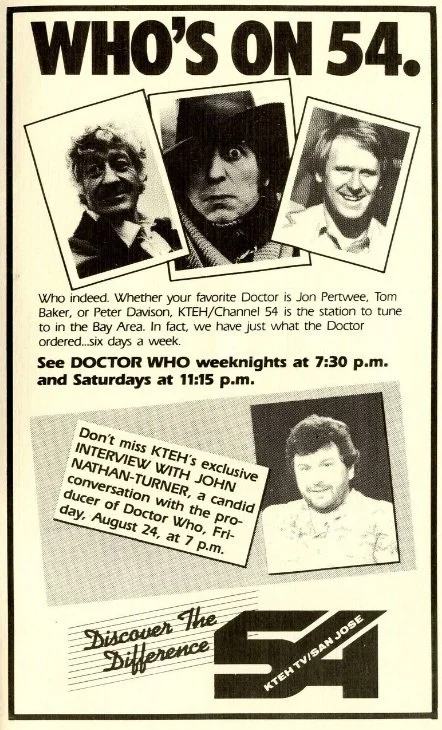
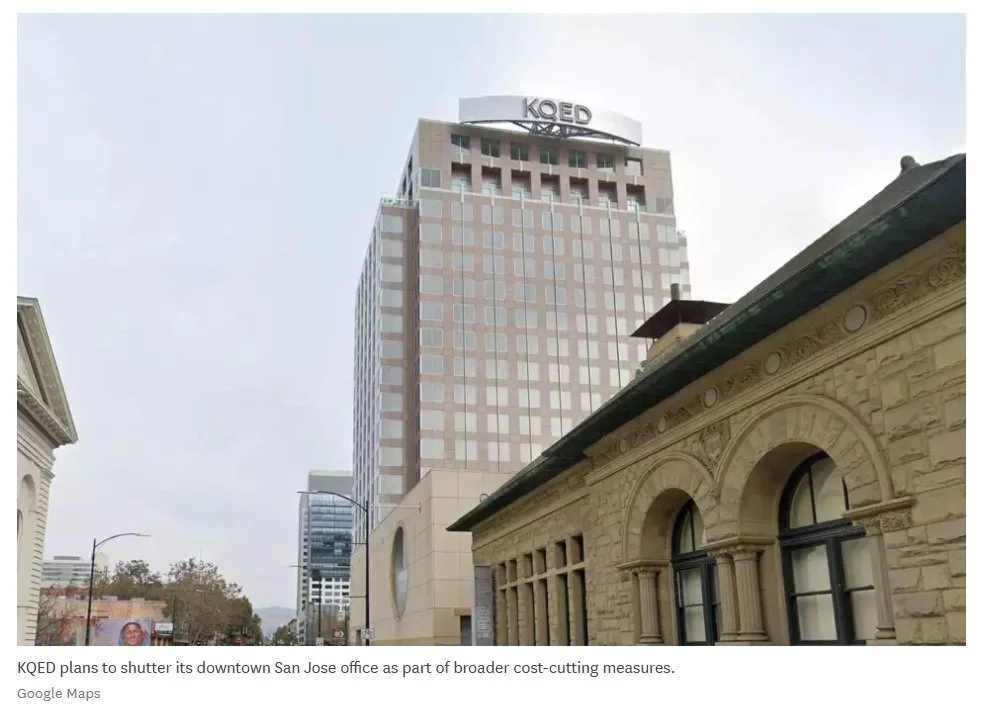
This site is dedicated to past and present KQED Radio and Television broadcast production staff members, as well as those once employed at KTEH in San Jose and the employees from the now closed KQED South Bay Bureau. (Click here or on the Who’s on 54 image to view the TardisWiki which has some interesting information about the history of KTEH.)
Northern California Public Media - An Outstanding Broadcast Service
Although this site is primarily about KQED, I want to congratulate Northern California Public Media, which in my opinion, is the best Public Broadcaster in our region.
Ironically, although KQED has allegedly reduced inhouse produced television programming to only 6.5 hours per year for Check Please! Bay Area, KRCB and KPJK seem to produce and broadcast an incredible amount of Bay Area-centered programming within KQED’s approximate broadcast signal area, employing a much smaller Northern California Public Media staff and a lean $6 million annual budget.
KQED now allegedly has 312 employees after an alleged $20 million in additional deficits since 2020. Its Tax filing for the Fiscal Year ending September 2024, cited an alleged $108,945,764 in total Revenue.
Northern California Public Media has earned my support and appreciation. Kudos to Darren LaShelle, their Board and staff, for their wise use of donor funds and thoughtful, open leadership model, as well as their commitment to producing local programming inhouse.
Staff Service And Dedication
This site honors those workers who like me, also volunteered at KQED for many hours after their shifts ended, to help produce and support KQED projects. Many KQED staff members won awards and recognition for their work. Their productions won Peabody and Emmy Awards. KQED staff were recognized locally at NATAS and within the Bay Area broadcast community.
This website was conceived to honor those workers, plus the workers eliminated by KQED since 2020, as well as the KQED staff members who came before them who were inspired by James Day and Jonathan Rice’s legacy to continue to advocate for and produce local programming inhouse, with unique Bay Area content, to be broadcast on-air.
On a personal note, I was pleased to view a KQED staff member’s LinkedIn video where the staff member complemented the KQED Auction, which was developed by Jonathan Rice to save the station during a difficult economic time. It was so nice to learn that staff members from my era (and the era of Jonathan Rice) were still remembered and appreciated for their long hours of work to ensure the station survived, providing employment for KQED employees today. During those years, KQED strove to provide a significant portion of member and donor funds for inhouse production of local television and radio programming.
Local On-Air Fundraising Drives
This site also serves as an online advocate for those in our Bay Area region who want the KQED Board and management to commit to significant fundraising, like that done by KQED management during Campaign 21, to significantly increase inhouse production of 30 to 60-minute local-interest television and radio programming. As stated previously, allegedly, KQED currently produces only 6.5 hours of television programming a year.

So if this site is all about producing local TV and Radio, why create this blog? Good question.
Advocating More Broadcast Production
I want to influence bloggers and podcasters to write treatments geared towards producing new content for local inhouse, on-air television and radio broadcast production. For example, blog text can evolve into elegantly worded on screen or radio narration for new radio and television programming. Likewise, podcasts can be compiled into a new, KQED Staff Presents, 30 or 60-minute weekly television broadcast series, so everyone with a television set can view all KQED content without needing added digital devices or digital subscriptions.
Once A Broadcast Production Powerhouse
My ultimate goal is to advocate for a return of KQED’s local, award-winning, Bay Area broadcast production legacy, with new, more engaging, contemporary and historic local Bay Area content.
Campaign 21 And On-Air Members
There are many viewers and listeners in the Bay Area who do not have access to KQED’s new, unique, blogging and podcast-only content, or KQED bricks and mortar events. Those members deserve to receive the full range of all content produced by KQED, which uses their member dollars. KQED must broadcast all content it produces on-air. In my opinion, podcasts and blogs function as small-audience media for one user looking at one device, in a room by themselves. KQED, according to Radio Ink, allegedly stated that it has a new 232-seat performance space called The Commons, in house. That in no way, in my opinion, serves the alleged, KQED-estimated 2.6 million Bay Area KQED audience members.
Once Engaged And Unified Bay Area Broadcast Audiences
The power of KQED used to be its ability to produce local programming which engaged and united its broadcast signal area viewers and listeners, in one shared experience.
KQED was once a powerful, personal and unifying broadcast service, offering unique content available to anyone in the Bay Area who owned a simple TV or radio set. I would like to see KQED return to that extraordinary legacy of public service.
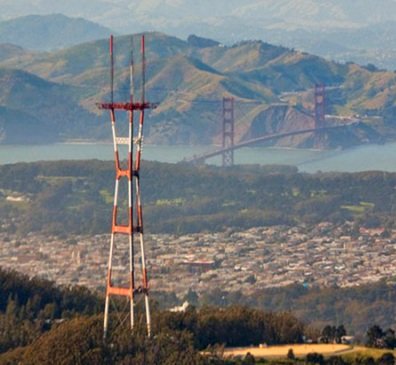
Many thanks to those sites who have placed historic KQED radio and television images and videos online, so I can share them with readers here for educational purposes.
Public Broadcasting History Resources
There are many excellent, detailed websites which offer a far more complete history of KQED, KRCB and Northern California Public Media, plus Bay Area broadcast history, than I provide here. A Google search for “Bay Area Broadcast History” “Northern California Public Media” or “KQED History” pulls up a wealth of websites and articles by individuals, groups and public media staff, all passionate about retelling our Bay Area radio and television broadcast legacies, images and historic videos, alive and accessible.
Current.org, a nonprofit, editorially independent service of the School of Communications at American University in Washington D.C., provides excellent background and updated news on the state of Public Broadcasting and its history. I donate and subscribe to support their School of Communications students, plus production of their excellent professional webinars.
I particularly recommend:
Day, James. The Vanishing Vision: The Inside Story of Public Television. Berkeley: University of California Press, 1995. Print.
Everhart, Karen, Mike Janssen and Steve Behrens. “Timeline: The History of Public Broadcasting in the U.S,” Current. Accessed online February 15, 2026.
Fore, William F. Public Broadcasting and Education: A Report to the Corporation for Public Broadcasting From the Advisory Council of National Organizations. Washington, D.C.: 1975. Online Version accessed February 15, 2026.
Roberts, Cokie. et al.This is NPR: The First Forty Years. San Francisco:Chronicle Books, 2010. Print.
Witherspoon, John, and Roselle Kovitz. The History of Public Broadcasting. Washington, D.C.: Current Publishing, 2000. (An updated version of the book will appear in 2026.)
WorldCat.org, a consortium of thousands of public and academic library catalogs online, provides the titles and locations of numerous books on the Public Broadcasting Service and National Public Radio, available for loan in your region. Some articles and books listed on Worldcat.org, a service of OCLC, are available for download online. A membership is not required yet your local public or academic library may pay for expanded OCLC access.
With Much Gratitude
A special thanks to the Rare Historical Photos website, The Bay Area Television Archive at San Francisco State University’s DIVA site and their “KQED collection”, plus the many Bloggers and YouTube posters who have shared KQED programming images and videos, keeping that vital programming history available today.
I hope you enjoy my compendium of historic Bay Area-produced programming posted by various organizations and individuals, plus those media organizations who provided news and statistics articles about KQED and Northern California Public Media (KRCB and KPFK), all linked back to their source, on this site.
Thank you for visiting Bay Area Broadcast Legacies.
I welcome your comments.